
Hi, I'm Arunkumar Rathinam
Research Scientist @ University of Luxembourg
I am a Research Scientist at the Interdisciplinary Centre for Security, Reliability and Trust (SnT), University of Luxembourg.
My research lies at the intersection of computer vision and space robotics. I am interested in building AI systems that can bridge the gap between simulation and real data for spacecraft pose estimation, and leveraging these capabilities to enable autonomous relative navigation and on-orbit servicing missions.
At SnT, I lead the ESA-funded DIOSSA project on deep learning–based spacecraft pose estimation, serve as operations lead for the Zero-G Lab, and co-supervise PhD students working on domain adaptation and event-based pose estimation. I also co-organize the AI4SPACE workshop and the SPARK challenge at CVPR.
Prior to joining SnT, I was a Research Associate at the Surrey Space Centre, University of Surrey, where I developed deep learning algorithms for non-cooperative spacecraft pose estimation and contributed to the FAIR-SPACE project. I received my Ph.D. from the University of New South Wales (UNSW) Sydney, where I worked on SLAM-based autonomous navigation for small body exploration. I completed my M.Sc. in Space Science and Technology at the University of Würzburg, Germany, where I contributed to the UWE-4 CubeSat mission.
Recent News
- October 2026 Our paper Domain-Aware Conformal Prediction for Trustworthy Spacecraft Pose Estimation under Sim-to-Real Shift will be presented at the Joint i-SAIRAS & ISPARO Conference (Nov 3–6, 2026)
- October 2026 Two papers accepted at WACV 2027: SCOPE on cross-domain 6D object pose estimation and TALON on lightweight adapters for spacecraft pose estimation
- September 2026 Our paper on unsupervised domain adaptation for sim-to-real object pose estimation was presented at IROS 2026
- September 2026 Our paper Eclipse: A Spacecraft Rendezvous Trajectories Dataset with Controlled In-Orbit Lighting Conditions has been accepted at NeurIPS 2026
- June 2026 Our paper Efficient Onboard Spacecraft Pose Estimation with Event Cameras and Neuromorphic Hardware appeared at the CVPR 2026 Workshops
- June 2026 Our paper Annotation Free Spacecraft Detection and Segmentation using Vision Language Models was presented at ICRA 2026 in Vienna, Austria
- January 2026 I’ll organize the fourth edition of SPARK challenge at CVPR’26
- December 2025 I’ll co-organize the AI4SPACE workshop at CVPR’26
- October 2025 Three papers presented at ASTRA 2025 (ESA, Leiden, Netherlands) on spacecraft pose estimation, domain adaptation, and real-time object detection
- February 2025 Our paper on AI-enabled thermal monitoring of Li-ion pouch cells was published in the Journal of Power Sources
Selected Publications
-
TALON: Token-Aligned Lightweight Adapters for 6-DoF Spacecraft Pose Estimation
WACV’27 Accepted -
Efficient Onboard Spacecraft Pose Estimation with Event Cameras and Neuromorphic Hardware
CVPRW’26 -
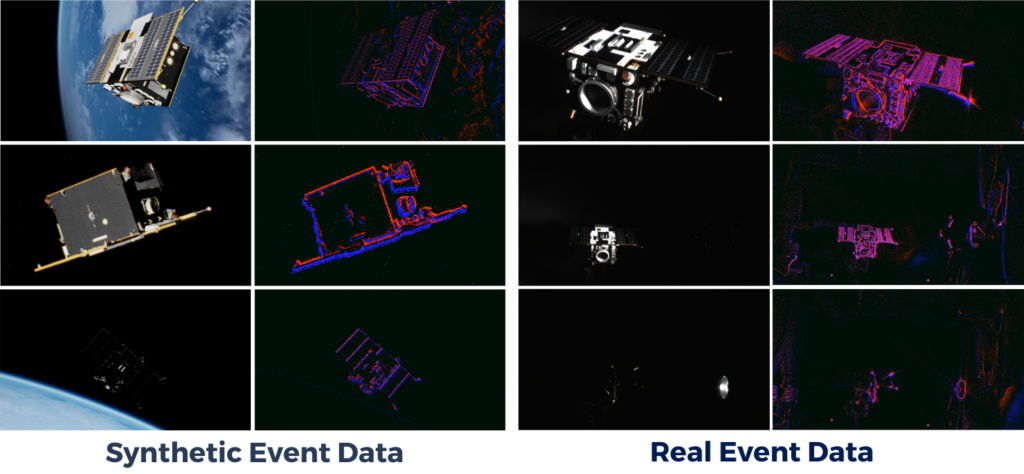
SPADES: A Realistic Spacecraft Pose Estimation Dataset using Event Sensing
ICRA’24

-
SCOPE: Saliency-Guided Cross-Domain Alignment for 6D Object Pose Estimation
WACV’27 Accepted -
Domain-Aware Conformal Prediction for Trustworthy Spacecraft Pose Estimation under Sim-to-Real Shift
iSAIRAS’26 Accepted -
Unsupervised Domain Adaptation for Sim-to-Real Object Pose Estimation with Contrastive Alignment and Pseudo-Label Refinement
IROS’26
-
Eclipse: A Spacecraft Rendezvous Trajectories Dataset with Controlled In-Orbit Lighting Conditions
NeurIPS’26 Accepted -
SPARK 2024: Datasets for Spacecraft Semantic Segmentation and Spacecraft Trajectory Estimation
Dataset
-
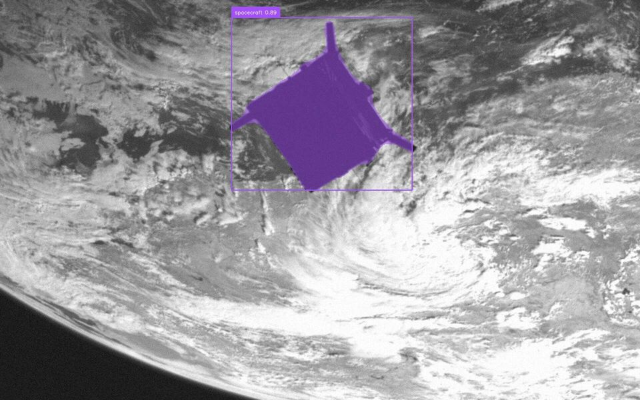
Annotation Free Spacecraft Detection and Segmentation using Vision Language Models
ICRA’26 -
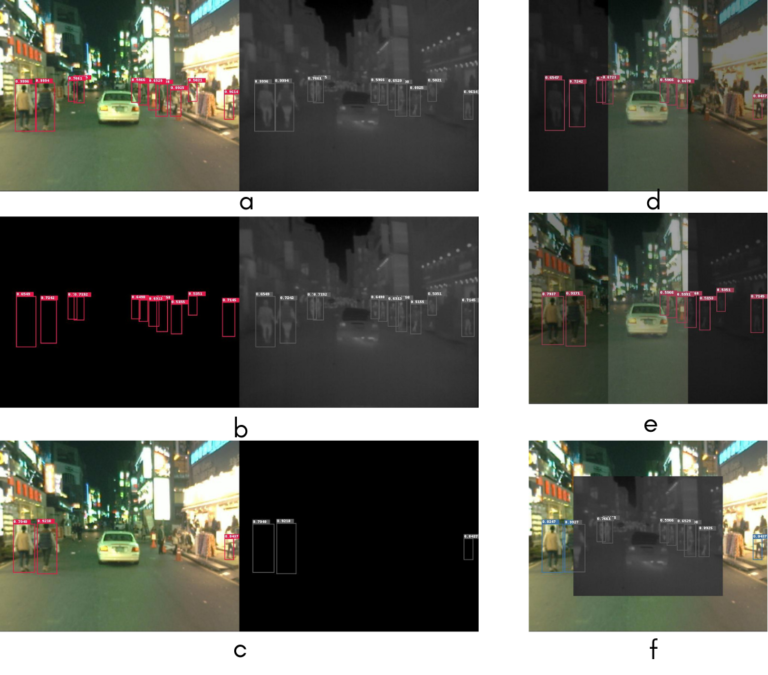
Hybrid Attention for Robust RGB-T Pedestrian Detection in Real-World Conditions
RA-L -
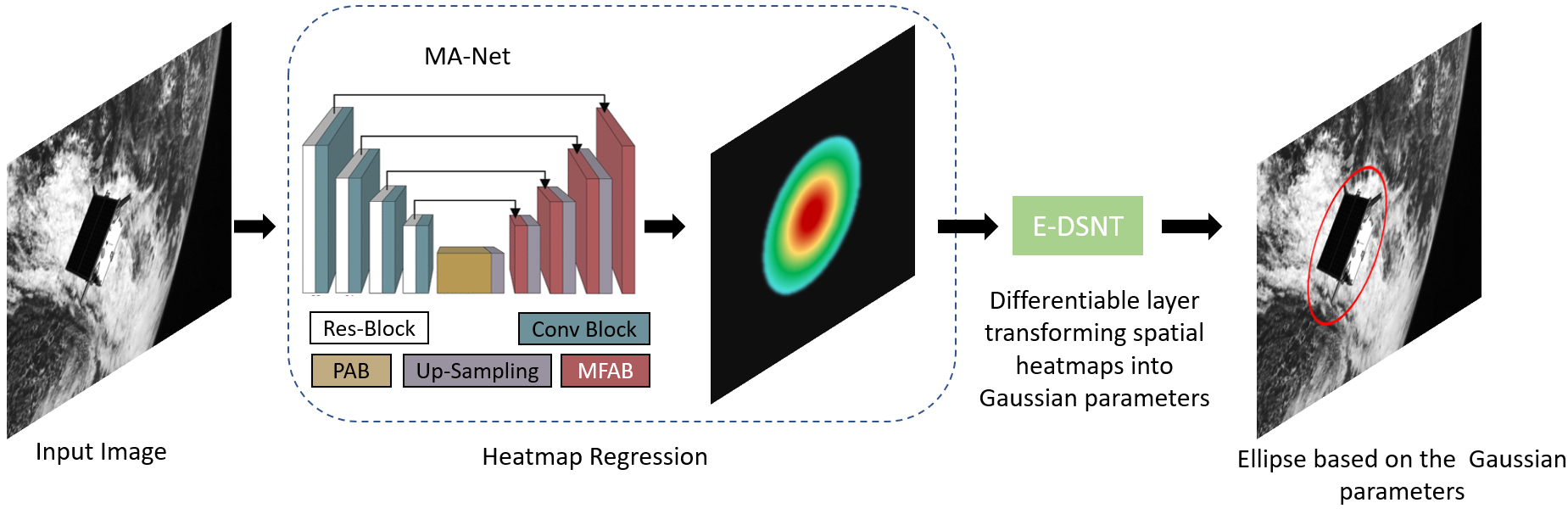
3D-Aware Object Localization using Gaussian Implicit Occupancy Function
IROS’23


Datasets
Open datasets I have authored for spacecraft perception. Download them from Hugging Face.
SPARK 2026
CVPR 2026 ChallengeSynthetic RGB spacecraft images with bounding boxes and segmentation masks for 10 spacecraft classes (~360k samples), released for Stream 1 of the SPARK 2026 challenge.
ECLIPSE
NeurIPS 2026Spacecraft rendezvous trajectories with controlled in-orbit lighting conditions.
SPADES
ICRA 2024Synthetic and real event-camera data of a satellite for spacecraft pose estimation — 300 synthetic trajectories with 179,400 pose labels.
SPADES-RGB
RGB companionRGB spacecraft images with 6-DoF pose, bounding-box and keypoint annotations (~180k samples).
SPARK 2024
CVPR 2024 ChallengeMonocular RGB sequences with per-frame 6-DoF pose labels for spacecraft trajectory estimation — 100 training trajectories (30,000 images).
SPARK 2022
ECCV 2022 Challenge110,000 RGB images of 10 spacecraft and a debris class with bounding-box labels, for spacecraft detection and classification.